So Specific It Broke: The Micro-Communities That Turned Their Own Weirdness Into the Point
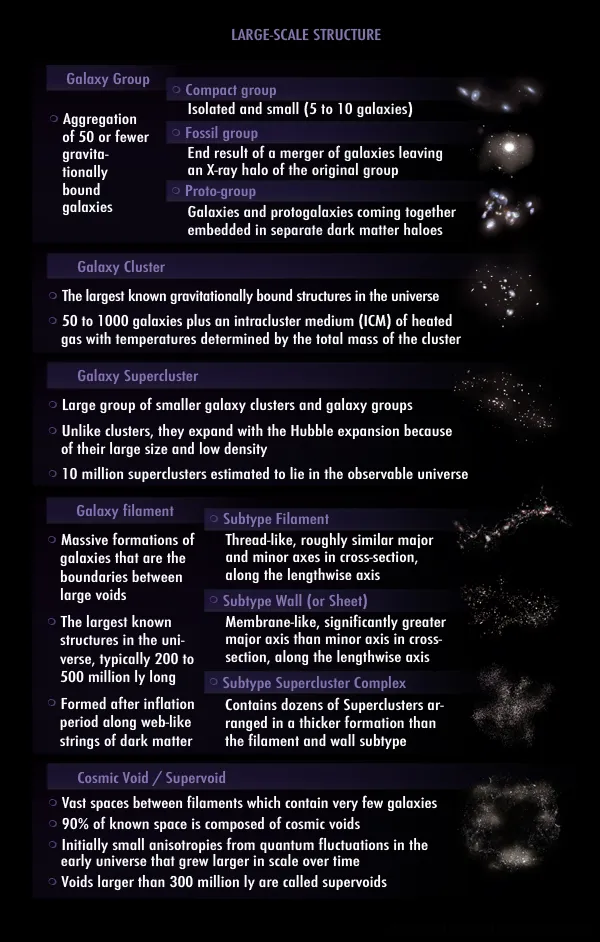
Photo: Pablo Carlos Budassi, CC BY-SA 4.0, via Wikimedia Commons
There's a Reddit thread dedicated to photos of doors that look slightly uncomfortable. It has 61 members. They are extremely serious about it.
This is not an anomaly. Across Discord servers, Reddit corners, and private Telegram groups, a particular kind of community has quietly proliferated — one so hyper-specific in its focus that it has looped all the way around from sincere obsession into something that functions almost like performance art. Except the performance is also completely genuine. That's the part that makes it interesting.
The Niche Singularity
For a long time, the internet was celebrated for its ability to connect people with obscure interests. You liked vintage Soviet bus schedules? There was a forum for that. You were obsessed with the specific sound of rain on corrugated metal roofing? Someone had already built a playlist. The promise was always connection — find your people, no matter how few they were.
But something shifted somewhere around the mid-2010s, and it's been accelerating ever since. The communities didn't just get more specific. They got aware of their own specificity in a way that changed what they were. The members of a 47-person subreddit dedicated to cataloguing fonts used in regional pizza box designs don't just share a love of fonts and pizza. They know, on some level, that their community is the bit. And that knowledge has become load-bearing.
Call it the niche singularity: the moment a micro-community becomes so particular that self-parody and sincerity become genuinely indistinguishable.
Why This Is Actually Rational
Here's the thing about algorithmic homogenization that doesn't get said enough: it's suffocating. If you've spent any time on a mainstream social feed recently, you know the feeling. The same audio. The same formats. The same eight emotional beats cycling through an infinite scroll. The algorithm doesn't reward weird — it rewards familiar weird, which is a completely different thing.
Hyper-niche communities are, in a very real sense, a rational response to that pressure. When everything online is flattened toward the mean, the only genuinely differentiated space left is the one so small and specific that the algorithm can't even see it. A Discord server with 40 people debating the regional variations of American diner laminate menus is, paradoxically, more culturally distinct than a TikTok account with 2 million followers doing "niche content."
The specificity isn't accidental. It's protective.
The Self-Aware Echo Chamber
What makes these communities genuinely fascinating — and a little philosophically slippery — is how they handle self-awareness. Most people use "echo chamber" as a pejorative, a place where bad ideas calcify because no outside air gets in. But the micro-niche communities operating at this level of specificity have developed a different relationship with their own insularity.
They know the walls are close. They've mapped every inch of the room. And instead of that being a problem, it's become the texture of the community itself.
Take the Discord servers built around extremely specific aesthetic micro-genres — not "cottagecore" but something three levels below that, something with a name that only makes sense if you've already spent 200 hours in the server. Members will openly joke about how impenetrable their internal language has become. New members are welcomed with a kind of affectionate bewilderment. "You'll get it eventually" is both a promise and a warning.
The inside joke isn't incidental to the community. It is the community.
Genuine Space or Elaborate Bit?
This is where it gets complicated, and honestly, where it gets interesting enough to actually talk about.
Ask a member of one of these communities whether they're being sincere or ironic and you'll often get a pause. Not because they're evasive, but because the question doesn't quite map onto their experience. The guy who moderates a 50-person subreddit about the specific visual language of 1990s American gas station signage will tell you, with complete seriousness, that he finds it genuinely beautiful. He'll also laugh about how insane it is that this community exists. Both things are true at the same time, at full intensity.
This is actually a fairly sophisticated cultural position. The internet trained a generation to perform sincerity ironically and irony sincerely, until the distinction became less useful than it used to be. These micro-communities have landed somewhere past that binary — a place where the absurdity of the specificity and the genuine passion for the subject exist in a kind of stable compound.
It's not post-irony, exactly. It's more like a community that has decided the question itself is less interesting than the laminate menus.
What Survives the Algorithm
There's a case to be made that these tiny, self-aware, borderline-parodic communities are actually doing something culturally important. In a media environment where everything is being optimized for reach, they're the places where genuine subcultural specificity still lives. The stuff that doesn't scale, doesn't go viral, doesn't translate into a brand deal.
And because they don't scale, they're also the places where the internet still occasionally feels like it did before it became an industry. Small, weird, slightly inexplicable, full of people who found each other for reasons that don't make sense on paper.
The 61 people arguing about uncomfortable-looking doors aren't going to change culture. But they're holding a particular kind of space open — one where being extremely specific about something strange is still, without qualification, allowed.
That might be worth more than it sounds.