404 Found: The People Who Are Deliberately Living Inside Dead Corners of the Internet
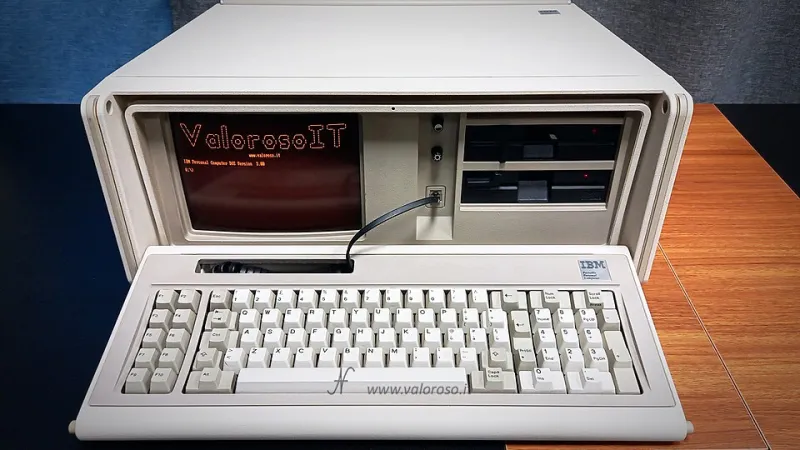
Photo: ValorosoIT, CC BY-SA 4.0, via Wikimedia Commons
Somewhere right now, someone is carefully recreating the visual language of a 2003 forum thread — the chunky fonts, the blinking avatars, the deeply sincere arguments about nothing important. They're not doing it as a joke. They're doing it because it feels, to them, like home.
This is niche nostalgia. And it's one of the stranger and more genuinely moving things happening in digital culture right now.
The Internet Had Eras. We Forgot That.
We tend to think of the internet as a single continuous thing, always updating, always current. But spend any time in the communities devoted to early web preservation and you start to see it differently — as something with distinct periods, each with its own aesthetic vocabulary, its own emotional register, its own way of being human online.
The mid-2000s forum era had a particular texture: verbose, earnest, slightly chaotic. MySpace had a DIY visual intensity that felt like decorating your locker with glitter and band stickers. Early Tumblr had a specific kind of melancholy that's almost impossible to describe to someone who wasn't there. Even early Twitter — before the discourse machine fully kicked in — had a looseness to it, a sense of people figuring out what this thing even was.
All of those eras are gone now, more or less. But not for everyone.
Who's Actually Doing This
The communities doing this work are harder to categorize than you'd expect. There are the obvious preservation projects — organizations like the Internet Archive doing the unglamorous work of keeping old websites accessible. But that's not really what niche nostalgia culture is about.
What's more interesting are the people who aren't just archiving these eras but inhabiting them. There are Discord servers where members communicate exclusively in the style of early-2000s AIM conversations, complete with away messages and the specific emotional cadence of that era. There are artists on Neocities — a platform explicitly designed to evoke GeoCities — building personal websites with the handmade visual chaos of 1998, but with fully contemporary content.
On TikTok, a loose community of creators posts videos that deliberately mimic the production quality and energy of 2006-era YouTube — the shaky camera, the bedroom lighting, the complete absence of professional editing. These aren't parodies. The creators talk about them as a kind of meditation on what online video felt like before it became an industry.
And then there are the meme archaeologists: accounts dedicated to reviving extinct formats — image macros, early rage comics, even the deeply specific humor of Vine — and using them to discuss completely current situations. The format is the point. The anachronism is the art.
Why the 'Wrong' Internet Feels So Right
There's a generational layer to this worth unpacking. The people most drawn to early internet aesthetics tend to be Gen Z and younger millennials — people who either experienced these eras as children or who discovered them through cultural osmosis and older siblings. Neither group is nostalgic for the internet of the early 2000s in a straightforward biographical sense. They're nostalgic for something more abstract.
Part of it is the scale problem. The modern internet is enormous, optimized, and relentlessly commercial. Every platform has been smoothed into something legible to advertisers. The result is a kind of aesthetic homogeneity that feels, to a lot of younger users, suffocating. The old internet — janky, personal, unmonetized, often deeply weird — represents a fantasy of digital life that felt human-sized.
There's also something about the sincerity of those eras that resonates. Early forum culture was earnest to a degree that would be considered cringe now. People wrote long posts about their feelings, argued passionately about television shows, formed deep friendships over shared niche interests — all without the ironic distance that contemporary internet culture often demands. Recreating those aesthetics is partly a way of giving yourself permission to be that earnest again.
Digital Archaeology as Art Practice
Some of this is crossing into genuinely recognized artistic territory. Artists like Molly Soda have been treating internet aesthetics — including deliberately outdated ones — as serious creative material for years. The concept of "web 1.0 aesthetic" has appeared in gallery contexts, in fashion, in graphic design that deliberately courts the visual language of mid-90s desktop publishing.
What's newer is the community-scale version of this: not one artist making work about old internet culture, but entire subcultures that have essentially decided to live in a specific digital era as a collective practice. It's closer to historical reenactment than art-making, except the history being reenacted is twenty years old and the participants know exactly how strange that is.
Some of these communities are also doing sophisticated theoretical work about what they're up to. There are lengthy Tumblr posts (still, always, Tumblr) analyzing the specific emotional qualities of different internet eras, arguing about which platforms represented genuine community versus which ones were always already commercial, debating what authenticity even meant online before authenticity became a marketing term.
What It Says About Now
The easiest read on niche nostalgia is that it's escapism — people retreating into a simpler past because the present is overwhelming. And there's something to that. The internet of 2024 is genuinely exhausting in ways that the internet of 2004 wasn't, partly because more of life runs through it, partly because the stakes feel higher, partly because the algorithmic systems shaping our experience are more sophisticated and more invisible.
But the escapism reading misses something. These communities aren't actually trying to go back. They know the old internet had real problems — it was less accessible, more hostile to marginalized groups in specific ways, dominated by even narrower demographics than today's platforms. They're not advocating for a return.
What they're doing is something more like using the past as a lens for critiquing the present. By recreating the aesthetics of an era before platform capitalism fully took hold, they're making visible what's been lost — the personal, the unpolished, the genuinely weird — and insisting that those qualities still have value.
The dead forum thread, rebuilt with care in 2024, is a kind of argument. It's saying: this way of being online was real. It mattered. And the fact that the current internet has no room for it is something worth noticing.
Sometimes the most radical thing you can do is act like it's 2003 and mean it completely.