Half-Built and Totally On Purpose: How the Unfinished Became the New Flex
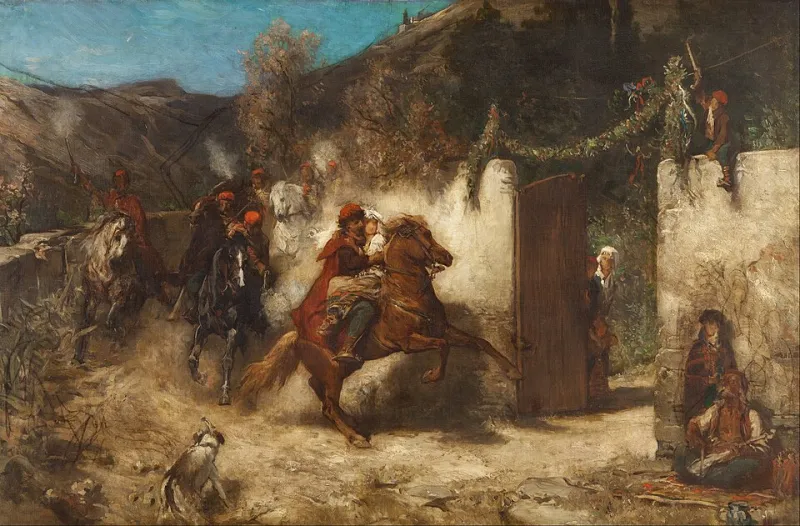
Photo: Jaroslav Čermák, Public domain, via Wikimedia Commons
There's a game on itch.io with exactly two levels, a placeholder soundtrack, and a dev log that ends mid-sentence in 2021. It has over 40,000 downloads. The comments aren't asking when the next update drops. They're saying things like "this feels more real than anything I've played this year."
Something genuinely weird is happening online, and it's worth paying attention to.
The cultural value of completion — the polished final product, the finished album, the feature-length film — is quietly getting dismantled. In its place, a new kind of status symbol is emerging: the thing that never got done, and is somehow better for it.
The Polish Problem
For a long time, "finished" was the whole point. You shipped the thing. You posted the final cut. You dropped the album. Incompleteness meant you ran out of money, ran out of time, or just couldn't hack it. The internet, for most of its commercial life, rewarded completion because completion was what advertisers, platforms, and audiences had been trained to expect.
But somewhere around the early 2020s, that logic started to crack.
Part of it is algorithm fatigue. When every piece of content is optimized, produced to a near-identical sheen, and structured around the same engagement hooks, the audience's nervous system starts tuning it out. Polished content stopped feeling premium and started feeling synthetic. And synthetic, in 2024, is basically the worst thing something can be.
Enter the unfinished. The draft. The prototype. The demo that's also the final version.
"WIP" as Aesthetic Identity
Work-in-progress culture didn't start as a strategy. It started as honesty — creators posting rough cuts because they didn't have time to finish, developers shipping early access because they needed cash flow. But audiences started responding to the rawness in ways nobody fully anticipated. The imperfection wasn't something to tolerate on the way to the real thing. It was the real thing.
Now WIP is a deliberate aesthetic. Artists on Instagram post "unfinished" canvases that are clearly curated to look unfinished. Indie musicians drop "demo versions" with intentional tape hiss and clipped vocals as the primary release. Twitch streamers let their broadcasts end abruptly, no sign-off, no wrap-up — and clip compilations of those awkward dead-air endings rack up millions of views.
The incompleteness signals something specific: I'm not performing for you. This is just what it looks like.
That's an extraordinarily powerful message in a media landscape where nearly everything is performing for someone.
Gen Z and the Anti-Climax
It tracks, culturally. Gen Z grew up watching YouTube tutorials, behind-the-scenes content, and creator vlogs that deliberately de-glamorized the creative process. The "making of" became as interesting as the thing being made — sometimes more interesting. The journey ate the destination.
What the unfinished aesthetic does is take that logic to its conclusion. If the process is the interesting part, why bother with the ending at all? The half-built game is the process, frozen in amber. The incomplete painting is the artist's thinking made visible. The abandoned Substack with three posts is a portrait of someone's headspace in a specific moment that a tidy, completed newsletter never could be.
There's also something genuinely anti-capitalist in the vibe, even if it's rarely stated explicitly. Completion, in a commercial context, usually means the thing is ready to be sold. Incompletion resists that. It sits outside the normal content-to-product pipeline. You can't really monetize a fragment the same way you monetize a finished thing — and that friction is, for a lot of Gen Z audiences, part of the appeal.
The Galleries Are Doing It Too
This isn't just a digital-native phenomenon. Contemporary art spaces across the US have been leaning into deliberate incompleteness for years, but the conversation has gotten louder recently. Installations that include visible scaffolding as part of the work. Exhibitions that are explicitly framed as "in progress" and change — or disappear — over the course of their run.
The art world has always had a complicated relationship with the sketch, the study, the unresolved. But what's different now is the framing. The incompleteness isn't being apologized for or contextualized as a stage on the way to something else. It's being presented as the final statement. The absence of resolution is the resolution.
For audiences who've grown up online, that framing is completely legible. They already understand it from a thousand abandoned game projects and half-finished SoundCloud accounts.
Status Through Restraint
Here's the counterintuitive part: the unfinished has become a flex precisely because it's hard to pull off. Anyone can finish something and release it. It takes a specific kind of confidence — or a specific kind of taste — to release the half-finished version and let it stand.
There's a reason the most-discussed incomplete projects online aren't random abandoned files. They're things where the incompleteness feels intentional, even when it technically wasn't. The creator had a strong enough point of view that even the fragment communicates something coherent. The unfinished game has a visual language. The abandoned album has a sound. You can feel the shape of what it was going to be, and that negative space is doing real work.
That's the status signal: not just "I didn't finish this," but "I have such a clear vision that even the unfinished version lands."
Where This Goes
Predictably, it's already getting gamed. Brands are releasing "unfinished" ad campaigns. Polished studios are shipping intentionally rough-looking demos as marketing. The aesthetic is being absorbed by the very commercial machinery it was, in some ways, pushing back against.
But that's how it always goes. The raw thing gets smoothed out, the authentic gesture becomes a template, and the audience moves on to find the next thing that feels real.
For now, though, the half-built, half-posted, half-thought-out corner of the internet is doing something genuinely interesting — making incompleteness feel like a form of integrity. And in a media landscape that's relentlessly finished, relentlessly optimized, relentlessly done, that's a pretty radical thing to be.