Meme Smarter, Not Harder: How Absurdist Internet Humor Became the Sharpest Social Commentary Around
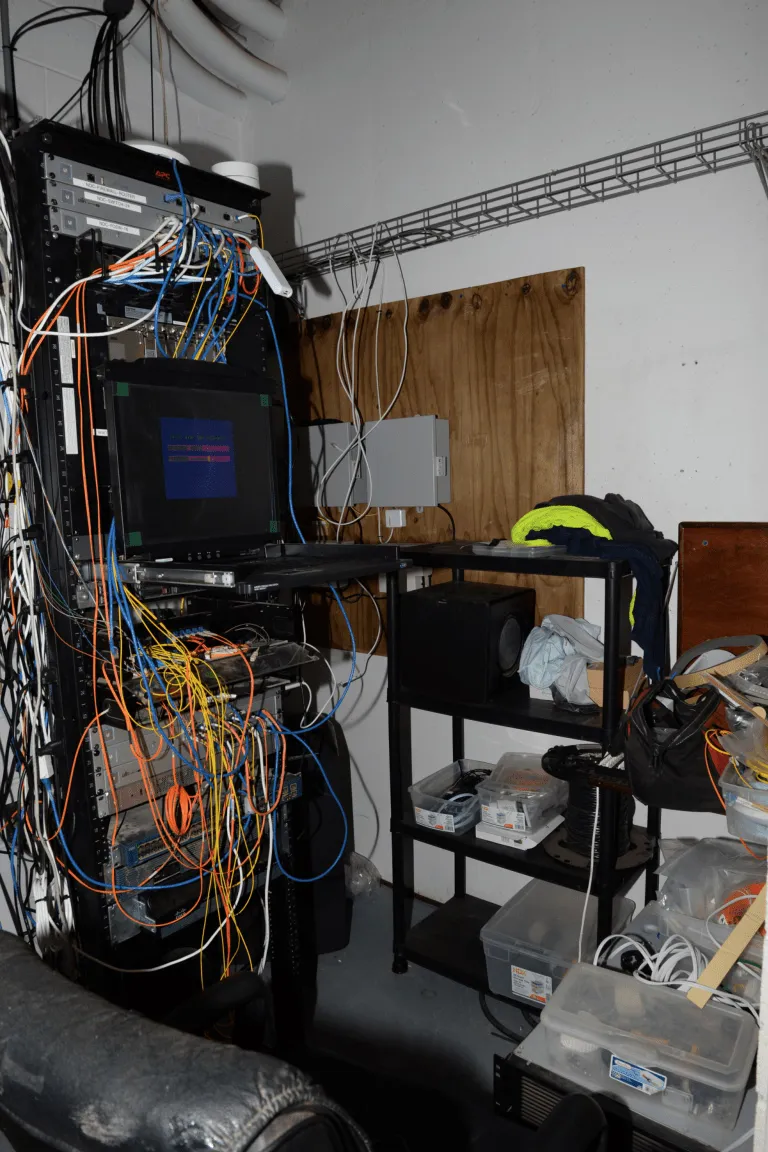
There's a meme format that's been circulating for a couple of years now. It's a low-resolution photograph of something completely mundane — a parking lot, a gas station, a fluorescent-lit break room — paired with text that somehow captures the entire existential weight of being alive in 2024. No byline. No editorial board. No 1,500-word op-ed preamble. Just a blurry image and a sentence that hits like a truck.
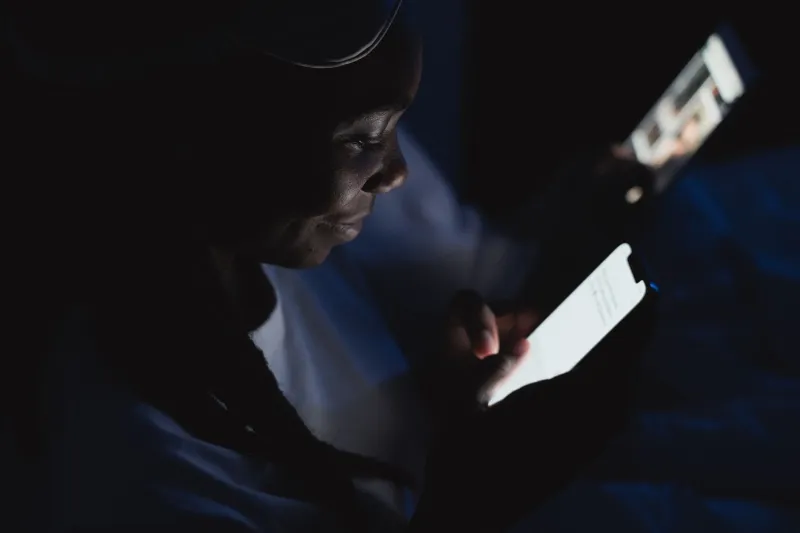
And somehow, that's the thing people screenshot and send to their friends at 2 a.m.
This isn't an accident. It's a shift — a quiet, chaotic, deeply weird shift in how Americans process ideas, and it's worth paying attention to.
The Death of the Op-Ed (As We Knew It)
Traditional opinion writing used to hold a specific kind of cultural authority. A columnist at a major paper would spend 800 words walking you through a thesis, and that was the format through which society collectively chewed on big ideas. It worked, mostly, for a long time.
Then something broke. Or maybe it evolved. Depending on who you ask, the op-ed industrial complex became either too slow, too credentialed, too predictable, or too detached from how people actually experience the world. The gap between what mainstream commentary was saying and what people were feeling got wide enough to drive a meme through.
And Gen Z, particularly, drove several thousand memes through it.
Polling and cultural research consistently shows that younger Americans trust institutional media less than any previous generation. But that's not the same as being disengaged. They're deeply engaged — just through different channels. The ideas are still being processed. The commentary is still happening. It just looks like a cat with Impact font on it now.
Why the Format Actually Works
Here's the thing that gets missed in most hand-wringing conversations about meme culture: the format is philosophically efficient in a way that traditional essay writing simply isn't.
A well-constructed meme operates on compression. It takes a shared cultural assumption, inverts it, exaggerates it, or reframes it — and does all of that in under three seconds. That's not dumbing down. That's a different kind of intellectual precision. Philosophers have a word for this kind of compressed meaning-making: aphorism. Marcus Aurelius did it. Nietzsche did it. The difference is that today's aphorists are anonymous accounts with usernames like @cursed_economics or @void_posting, and their medium is a JPEG.
Absurdism, in particular, has become the dominant philosophical register of online culture — and that's not random. When the world feels genuinely chaotic and systems feel broken, absurdist humor isn't just coping. It's accurate. Camus wrote about the absurd as the tension between humans' desire for meaning and the universe's silence on the matter. A meme that depicts a skeleton sitting at a desk waiting for healthcare reform to pass is making the same argument. It's just doing it in a way that gets 200,000 likes.
Distributed Meaning-Making Is the New Intellectual Culture
What's genuinely fascinating — and underreported — is that meme culture has created something resembling a distributed intellectual commons. There's no editor assigning these pieces. There's no institution gatekeeping what ideas get amplified. A teenager in Tulsa can create a format that reframes how millions of people think about late-stage capitalism, and that format can spread faster than any newspaper column ever could.
This is democratization of a particular kind. Not just of content creation, but of meaning-making itself. The ability to frame a cultural moment, to name a feeling, to identify a contradiction — that used to belong to credentialed people with platforms. Now it belongs to whoever makes the thing that resonates.
And the thing that resonates is often smarter than its packaging suggests. Memes about housing affordability have, at various points, communicated the core economic contradictions of the American dream more clearly than policy papers did. Memes about burnout captured the psychological reality of modern work culture before most corporate think pieces acknowledged there was a problem. The meme got there first.
The Parody That Became the Primary Source
One of the stranger developments in this space is how meme culture has started to eat its own references. Originally, memes parodied mainstream media — they were the commentary on the commentary. But at this point, for a significant chunk of the population, the meme is the primary source. The original article gets skipped entirely. The meme framing is how the event is understood.
This makes legacy media uncomfortable, and understandably so. But it's also worth interrogating whether the discomfort is about quality of understanding or about loss of control over framing. Because often — not always, but often — the meme framing is actually the more honest one. It strips out the hedging, the both-sidesing, the careful institutional language designed to offend nobody. The meme just says the thing.
That directness is part of why people trust it. It's not that Gen Z can't detect bias — it's that they'd rather have bias that's legible than neutrality that's performing something.
Where This Gets Complicated
None of this is an uncomplicated win. The same format that can carry a sharp critique of corporate greed can also carry misinformation with equal viral velocity. The compression that makes memes philosophically efficient also makes them easy to strip of nuance. Context collapses. Irony gets read as sincerity. Sincerity gets read as irony. The memetic ecosystem is not a reliable epistemological system — it's a chaotic, beautiful, frequently maddening one.
And there's a real question about what happens to ideas when they're fully absorbed into the attention economy. Does the sharpest critique lose its edge when it becomes a reaction image? When a meme about systemic inequality gets used as a brand's Instagram caption, something has clearly gone wrong.
But these are problems of success, in a way. The ideas are out there. They're moving. They're landing with people who might never have engaged with a traditional essay on the same topic.
The Accidental Canon
What we're watching, in real time, is the formation of an accidental philosophical canon — one built not in academic journals or magazine archives but in screenshot folders and group chats and subreddits that don't take themselves seriously at all.
Decades from now, cultural historians are going to have to reckon with this. They're going to dig through archives of formats and image macros the way scholars dig through pamphlets and broadsheets, trying to understand what a society actually believed versus what its official record claimed it believed.
And they're going to find that the memes were often telling the truth.
Somewhere between the irony and the absurdism and the deliberately terrible image quality, people were working things out. Naming things. Thinking out loud, collectively, in a format that looked like a joke.
It kind of was a joke. It was also kind of the most honest thing happening.