Scroll Past the Video. The Real Show Is Down Here.

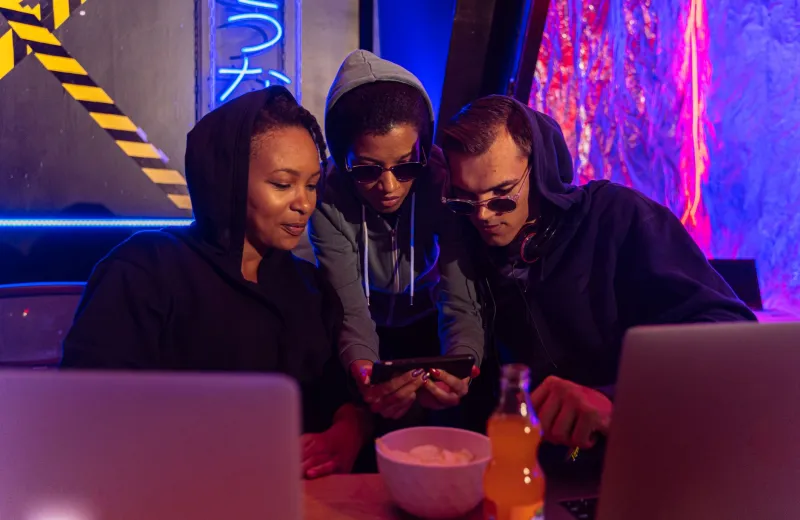
Photo: Shixart1985, CC BY 2.0, via Wikimedia Commons
There is a moment, about three seconds into a mediocre video, when you can feel the audience leaving. Not the app—the video. They are scrolling down. They are opening the comments. The show they came for is not the one playing at the top of the screen.
This is not a new behavior, but it has become harder to ignore. In 2026, the comment section is not a afterthought. It is a second stage. Reply threads have their own characters, running jokes, fictional histories, and feuds. Audiences do not just react to the post. They perform for each other underneath it.
The second show starts after the punchline
You have seen the pattern. A creator posts something ordinary—a cooking clip, a gym video, a short rant about airport carpets—and the comments turn it into something else. Someone invents a backstory. Someone else adds a recurring character. A third person writes a fake update from six months in the future. By the time the creator checks back, the reply thread has more plot than the original post.
The old joke was ‘the comments are better than the video.’ The new reality is that the comments are a different format entirely. They are live, collaborative, and almost completely uncredited. They have more in common with improv comedy than with a traditional audience response.
Anatomy of a reply thread
The best threads have a rhythm. The first few comments establish the bit. The next wave escalates it. Then someone breaks character to explain the joke, which somehow makes it funnier. A creator might drop in to reply in character, or to deliberately misread the thread and send it in a new direction. The audience treats that reply like a guest star walking on set.
There is also fake lore. A commenter will reference an event that never happened—a fictional feud, a made-up product, a cursed vacation—and other commenters will nod along as if they were there. This is not confusion. It is collaboration. The thread becomes a tiny shared universe, and everyone is allowed to write a scene.
The creators who write for the replies
Some creators have started treating the comment section as part of the production. They plant loose threads in captions. They leave a question unanswered on purpose. They reply to a few early comments with lines that seem casual but are designed to give the thread a direction. One mid-size YouTube creator told me they plan their replies before they even publish the video. Not because they are trying to manipulate the audience, but because the replies are where the audience actually hangs out.
This is a weird inversion of the old model. The video used to be the main event and the comments were the lobby. Now the video is often the prompt, and the comments are the show. The creator is not just a performer. They are a host, a moderator, and sometimes a straight man for the audience’s jokes.
Why platforms keep missing the point
Platforms count comments as engagement. They use them to decide what to show more people. But they do not treat commenters as creators. There is no credit roll, no easy way to follow a funny reply guy, no revenue split for the person who wrote the line that made the thread take off. The comment section is arguably the internet’s most collaborative entertainment format, and it is also the least compensated.
This is not a small oversight. The people writing the bits are producing value. They are keeping audiences on the app. They are making the original post more shareable. But the system is designed to reward the account at the top of the page, not the people in the replies.
The unpaid writers’ room
There is an upside to the anonymity. Comment sections are low-stakes. You can try a joke, bomb, and disappear. You can be a minor character in a thread without building a personal brand. Some of the funniest people on the internet are not creators at all. They are commenters who show up, drop a perfect line, and leave.
But there is a downside too. The same dynamics that make the thread fun can make it hostile. Inside jokes can become exclusionary. Pile-ons can turn a bit into a fight. Moderators are often doing unpaid emotional labor at scale. The second show has no budget for safety either.
Down here, everyone gets a mic
The comment section is messy, uncredited, and frequently terrible. It is also one of the last places on the internet where the audience and the performer share the same room in real time. The video may be the headline, but the replies are where the culture actually happens.
So the next time you scroll past the video, do not think of it as skipping the show. You are going to the show. It just does not have a title card yet.