Posting Nothing, Building Everything: The Creators Who Made Emptiness Their Brand
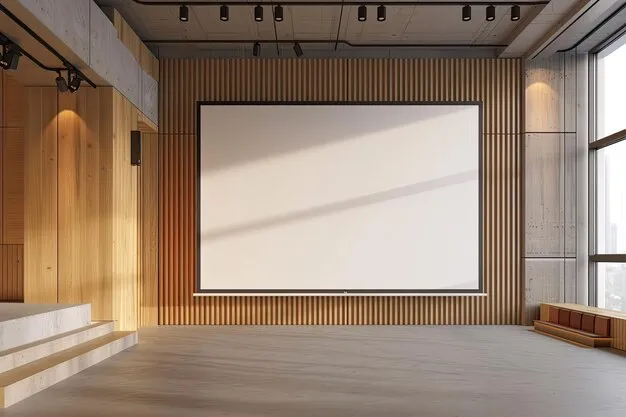
Photo: minimalist blank white screen empty room modern aesthetic, via img.freepik.com
Somewhere on YouTube right now, a ten-hour video of a completely black screen has thousands of views. On Twitch, a streamer is live with no camera, no game, no music — just a static image and a chat room filling up with people saying nothing in particular to each other. On Instagram, an account with a six-figure following posts white squares. No caption. No hashtag. Just white.
This isn't a glitch. It's a genre.
The Content That Isn't
The void, as it turns out, has an audience. And that audience is growing.
Creators who traffic in deliberate emptiness — blank uploads, silent streams, posts stripped of any discernible message — have carved out a genuinely strange and increasingly visible niche in the attention economy. They're not performance artists in the traditional sense, though some lean into that framing. They're not trolling, exactly, though there's a thread of provocation running through what they do. Mostly, they're just... not giving you anything. And people keep coming back.
The phenomenon isn't entirely new — John Cage's 4'33" made silence a composition back in 1952 — but the internet version has its own flavor. It's less academic, more ambient. Less statement, more vibe. And it's landing differently in 2024 than it would have even five years ago, because the context around it has changed completely.
We are drowning. That's the context.
Overstimulation as Setup
The average American adult now encounters somewhere between 4,000 and 10,000 ads per day, depending on which study you believe. That number doesn't even account for organic content — the TikToks, the Reels, the newsletters, the Slack notifications, the group chats, the podcasts playing in the background while you scroll something else entirely. The feed never stops. The algorithm never rests.
Into that environment, someone posts a blank video. And something in your nervous system just... exhales.
That's the psychological hook, and it's more sophisticated than it looks. Dr. Erin Westgate, a psychologist who studies boredom and mind-wandering, has written about how the human brain doesn't actually want constant stimulation — it wants meaningful stimulation, and when it can't find that, it suffers. The modern content landscape offers infinite stimulation that often registers as meaningless. Emptiness, paradoxically, can feel like relief.
Some creators seem to have figured this out intuitively. They're not making a philosophical argument. They're just offering a break, and the break is the product.
Who's Actually Doing This
The creators operating in this space are harder to profile than you'd expect, because the void attracts a genuinely eclectic crowd.
There are the ambient streamers — people who go live on Twitch or YouTube with nothing more than a looping visual, maybe rain sounds or a fireplace, and let the chat become the show. These have roots in lo-fi hip-hop streams and study-with-me content, but the newest iteration strips even that away. No music. No host. Just the room.
Then there are the blank posters — accounts on Instagram or Tumblr that upload images with no color, no subject, no apparent meaning. Some use the caption to gesture at irony. Others don't even do that. The blankness is complete.
And then there are the deliberate no-content creators — people who announce uploads, build anticipation, and then deliver files that are technically content (a video exists, an audio file exists) but contain nothing. One YouTube creator built a following of over 200,000 subscribers doing exactly this, framing each blank upload with deadpan sincerity. The comments are the most active part of the whole operation.
That last part matters. The community fills the void.
The Audience Isn't Passive
Here's what's interesting about the people who follow these accounts: they're not zoning out. They're weirdly engaged.
Comment sections under blank videos tend to be unusually thoughtful. People write about what the nothing reminds them of, what they were doing while they watched, how it made them feel. There's a confessional quality to it — like the absence of content gives people permission to be the content themselves. When there's nothing to react to, the reaction becomes the thing.
This is a significant inversion of how the creator economy normally works. Usually, creators perform and audiences consume. In the void genre, the creator steps back and the audience steps forward. The community becomes self-generating. It's less a fanbase and more a collective art project that everyone is sort of accidentally making together.
Some creators have leaned into this dynamic deliberately, structuring their emptiness to maximize audience participation. They'll post a blank image with the caption "finish this" and let followers do the work. The creator becomes a curator of negative space, and the audience becomes the actual artist.
What We're Actually Hungry For
There's a cynical read on all of this — that it's just another content strategy, a clever hack to get engagement without doing any real work. And sure, some of it is that.
But the more interesting interpretation is that the void genre is revealing something real about what people actually want from the internet right now, and it's not more content. It's permission to stop.
We've built a culture where attention is currency and silence reads as failure. Not posting means you've fallen off. Not having an opinion means you're irrelevant. The constant performance of presence — on every platform, at every moment — has become its own kind of exhaustion. When a creator posts nothing and gets rewarded for it, they're puncturing that logic. They're demonstrating that the rules are made up.
For audiences, following someone who posts nothing can feel like a small act of resistance. You're opting into a relationship with a creator that explicitly asks nothing of you. No takeaways. No calls to action. No "smash that subscribe button." Just... whatever this is.
In a landscape built on maximalism, the minimal is radical. In a feed built on noise, silence is actually loud.
The Void Looks Back
It would be easy to dismiss this as a fringe curiosity — a few weird accounts doing a bit that'll get old. But the numbers suggest otherwise. Blank content and ambient emptiness are growing categories, not shrinking ones. Platforms have noticed. Audiences have found each other.
The creators who figured this out early aren't necessarily geniuses. They might have just been tired. They stopped performing, posted nothing, and discovered that nothing was exactly what someone needed.
That's a strange kind of genius, actually. Or maybe it's just the internet being the internet — finding a way to make even the absence of a thing into a thing, and then building a whole community around it.
The void, it turns out, is pretty good content.