Choosing to Disappear: Why Some Creators Are Deliberately Breaking the Algorithm
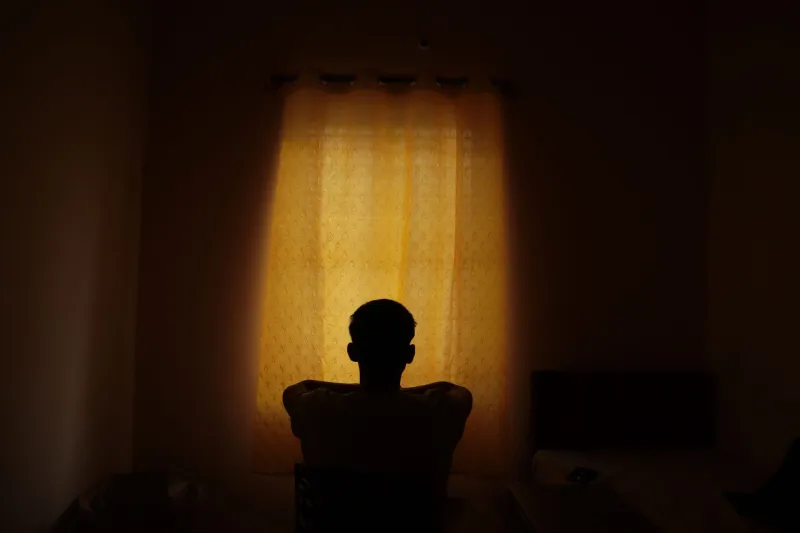
Somewhere around the third year of posting, a lot of creators hit the same invisible wall. The numbers are good. The brand deals are coming in. The growth curve looks exactly like the ones in the YouTube masterclass they bought in 2021. And yet — something feels deeply, specifically wrong.
For a certain kind of creator, the response to that feeling isn't therapy or a sabbatical. It's sabotage.
Deliberate, calculated, almost gleeful sabotage.
The Optimization Trap Nobody Talks About
Here's what the creator economy doesn't advertise: the better you get at feeding the algorithm, the less the content belongs to you. Every A/B tested thumbnail, every hook written to survive the first three seconds, every upload timed to hit peak engagement windows — it all works. And it all costs something.
What it costs is the part of you that made you want to do this in the first place.
Creators who've spent years optimizing describe a specific kind of dissociation — watching their own videos and not recognizing the person in them. The performance of authenticity, as anyone who's been online long enough knows, eventually hollows out the actual thing. You get so good at seeming real that you forget what real felt like.
The algorithm doesn't care about that distinction. It rewards the performance either way.
Breaking Things on Purpose
So some creators started breaking things. On purpose.
Posting at 2 a.m. on a Tuesday. Using hashtags that platforms have quietly buried. Uploading content with no hook, no CTA, no retention bait — just a thing they made because they wanted to make it. Refusing to cross-post. Ignoring the analytics dashboard entirely for weeks at a time.
The results, predictably, are terrible by every conventional metric. Reach drops. Impressions crater. The algorithm, sensing a disturbance in the optimization force, quietly stops pushing the content to new eyes.
And for a lot of these creators? That's exactly the point.
There's a term floating around in certain corners of the internet for this: algorithmic ghosting — the act of making yourself functionally invisible to the recommendation engine while still technically posting. It's not quitting. It's something stranger and more intentional than quitting.
The Audience That Stays
Here's the part that surprises people: something interesting happens when you stop optimizing for discovery.
The audience that finds you anyway — or stays with you through the drop — tends to be different. More engaged in ways that don't show up cleanly in analytics. More likely to reach out directly. More likely to actually care about the work rather than having been algorithmically served it like a targeted ad.
There's a counterintuitive logic here that flies in the face of everything the creator economy preaches. Friction, it turns out, is a filter. When content requires some effort to find — when it isn't being actively pushed into every available eyeball — the people who find it chose to find it. That changes the entire dynamic of the relationship.
One travel creator who quietly stopped using SEO-optimized titles described her comment section as feeling "like a different room" after the change. Less noise. More actual conversation. Fewer people who stumbled in from a trending page and immediately asked why she wasn't doing something more popular.
Creative Sovereignty as the New Flex
What's happening here is partly a reaction to a specific cultural moment. The creator economy, which spent the better part of a decade promising freedom and independence, has quietly revealed itself to be its own kind of corporate structure — just one where the boss is an algorithm and the performance reviews are weekly.
The most optimized creators are, in many ways, the most constrained ones. Every decision filtered through what the platform rewards. Every creative instinct weighed against its potential reach. It's a gilded treadmill, and a lot of people have been running on it for years without stopping to ask whether they actually want to go wherever it's taking them.
Deliberately breaking your reach is, in this context, a power move. It's a way of saying: I decide what this is for. Not the dashboard. Not the brand deal pipeline. Not the engagement rate benchmarks in some platform's creator newsletter.
There's something almost perversely luxurious about it — the ability to tank your own metrics and survive it. Which is, admittedly, a kind of privilege. Creators who depend on platform income for rent can't exactly afford to experiment with algorithmic self-destruction. The ones doing this tend to have some financial cushion, or have made peace with the fact that their creative practice and their income stream might need to be different things.
What Gets Made in the Dark
The content that comes out of this experiment is often genuinely different. Less polished in the ways that signal optimization. More willing to be slow, or weird, or unresolved. More likely to be about something the creator actually cares about rather than something a keyword tool suggested.
Which isn't to romanticize obscurity for its own sake. Plenty of creators who've tried this have eventually drifted back toward optimization, especially when the bills get real. And there's nothing inherently more authentic about low-effort content — bad work is still bad work, regardless of what time you uploaded it.
But there's something worth paying attention to in the impulse itself. The fact that a significant number of people who achieved exactly what the creator economy told them to achieve — the numbers, the deals, the growth — looked at all of it and decided the most meaningful thing they could do was make themselves harder to find.
The Algorithm Doesn't Miss You
The platforms, for their part, have no opinion about any of this. The algorithm isn't wounded by your rebellion. It just quietly redistributes its attention to someone else who's still playing by the rules. The machine keeps running.
Which might be the most clarifying part of the whole thing. The optimization treadmill doesn't actually need you specifically. It needs content that performs. You are interchangeable with anyone else willing to hit the same marks.
Knowing that — really knowing it, not just intellectually but in your gut — changes the math on what any of this is worth.
Some creators are doing the math and deciding the reach isn't the point. The work is the point. And if the work needs to live in a quieter corner of the internet to stay the work, then that's where it's going to live.
The algorithm can figure out what to do without them.